Embroidery Digitizing Services in Illinois
Illinois Embroidery Digitizing Services
Let's start with a question most Illinois embroidery businesses have lived through. You send a design to your machine, the file loads fine, the preview looks clean. Then the machine runs and thread starts breaking at the same spot on every pass. Or the small text you approved stitches out as an unreadable blob. Or the logo that looked sharp on screen comes out slightly distorted on the polo because the fabric pulled and nobody compensated for it in the file.
That's not a machine problem. That's a digitizing problem. And it's one of the most common and most expensive issues facing embroidery shops, uniform suppliers, and promotional product companies across Illinois right now.
Illinois is the fifth-largest economy in the United States. Illinois GDP reached USD 1.23 trillion in 2025, up from roughly USD 895 billion in 2019, marking more than USD 300 billion in economic growth. Illinois is home to more than 1.4 million small businesses, employing 2.4 million people and accounting for 99.6% of all businesses in the state. That economic size means constant demand for branded apparel, corporate uniforms, event merchandise, and custom embroidery from Chicago's corporate corridors to the manufacturing belt in Peoria and Moline to the university towns of Champaign and Bloomington.
And most of the embroidery shops and decorators serving that demand are working with digitizing files they didn't build themselves. Some of those files are good. A lot of them are not. Auto-digitizing software generates stitch files in seconds, they look fine in preview, and they fail on fabric because no human being actually engineered them for the garment type, the fabric weight, or the specific machine being used.
Digitizing Studio fixes that. We're a USA-based embroidery digitizing company with our phone number rooted right in Illinois at 630-931-2700. Every file we produce is built manually by a certified embroidery digitizing specialist. Not generated. Built. Thread break problems disappear. Rework rates drop. Clients stop calling with complaints. That's what professional embroidery digitizing services in Illinois actually look like.
The global embroidery market was valued at USD 1.54 billion in 2024 and is projected to reach USD 2.62 billion by 2033 at a 6.1% CAGR. North America holds 34.09% of the global market share in 2025. The US promotional products market is worth USD 19.8 billion in 2026. Illinois sits at the center of that demand, and the businesses winning in this market are the ones producing consistently clean embroidery on every order. This guide explains exactly how that happens.
Why Illinois Embroidery Businesses Need Better Digitizing
Why does embroidery digitizing quality matter so much in Illinois specifically? Because the market here is unforgiving. Chicago is a globally competitive business city where corporate clients have high standards and plenty of options. A uniform supplier in Springfield serving state agencies needs to get every order right because government contracts don't come with second chances. A promotional products company in Naperville competing for event merchandise business is only as good as the last order they delivered.
The breadth of industries demanding embroidered apparel across Illinois is enormous. Healthcare systems. Hospitality groups. Financial services firms. Construction companies. Schools and universities. Sports teams and athletic programs. Food and logistics operations. All of them need logos on garments, and all of them will notice when the embroidery doesn't look right.
STAT: Illinois GDP grew 5.85% from Q4 2024 to Q4 2025, outpacing the national rate of 5.36%. The professional and business services sector contributed USD 141 billion to Illinois GDP in 2025. Manufacturing contributed USD 106.4 billion more.
Here's the math that Illinois embroidery businesses don't always think through until it hits them. A uniform company with a 23% rework rate is rebuilding almost one in four orders. If the average order is 24 pieces at USD 18 in materials and labor per piece, that's over USD 99 in rework cost on every order. Multiply that across a month of production and it becomes a very significant number. One client of Digitizing Studio cut their rework rate from 23% to under 2% simply by switching to professionally built digitizing files.
Position 1 on Google earns a 40% click-through rate. The same competitive logic applies to embroidery. The shop that consistently delivers the best product earns the referrals and the repeat business. Quality starts with the file.
What Auto-Digitizing Gets Wrong Every Time
What auto-digitizing software gets wrong is not occasional or unpredictable. It's systematic. The same categories of errors appear in auto-digitized files regardless of which software package generated them, because those errors come from the same root cause: no human knowledge of the specific garment, fabric, and machine being used.
Underlay errors are the most damaging. Underlay is the invisible base stitching layer that stabilizes fabric before the visible top stitches go down. Auto-digitizing applies a default underlay pattern regardless of fabric type. A zigzag underlay that works fine on stable woven cotton does nothing useful on a 100% polyester moisture-wicking athletic jersey. The fabric moves under the needle, the design registers incorrectly, and you get distortion that no amount of machine adjustment can fix because the problem is in the file.
Pull compensation errors are next. Every stitch pulls the fabric inward slightly as it tightens. Professional digitizers build compensation into each element so the finished embroidery matches the approved design dimensions. Auto-digitizing uses default values that may or may not apply to the fabric being sewn. On stretch fabrics, this gap between intended and actual dimensions becomes visible in the finished product.
Density errors cause the thread break issues that drive Illinois embroidery operators to distraction. Too dense on a lightweight performance fabric and the needle punches repeatedly through the same small area, perforating the material and causing constant breaks. Too light on a heavier canvas and the base fabric shows through the stitching.
The Error
What Auto-Digitizing Does
What Our Specialists Do
Underlay
One default type for all fabrics
Custom type and density per fabric
Pull Compensation
Default value only
Calibrated to actual fabric stretch
Stitch Density
Same setting across all elements
Calculated per element and fabric weight
Small Text (under 5mm)
Merge and blur, often unreadable
Running stitch, legible at 4mm
Color Sequencing
Often unoptimized
Grouped to minimize machine stops
3D Puff Files
Incorrect density and no foam comp
Proper foam compensation built in
Applique Sequence
Wrong stitch order frequent
Placement, tack-down, border in order
Rework Rate
15 to 25% average
Under 2% with Digitizing Studio
Stop losing production time to bad files. Upload your artwork at digitizingstudio.com and let a certified specialist build it correctly the first time.
How Digitizing Studio Builds Every Illinois File
How Digitizing Studio builds every Illinois file is worth explaining in detail because the process is genuinely different from what most digitizing providers do, and that difference is what produces the quality gap.
Artwork Review Before Anything Else
Every order starts with the specialist reviewing your artwork and your brief before a single stitch path is drawn. They accept JPG, PNG, PDF, AI, EPS, SVG, CDR, and all common formats. The artwork review looks at design complexity, fine detail, small text, thin lines, and gradient elements that need specific handling decisions. Your brief covers fabric type, garment style, placement, size, thread colors, and machine format. That information shapes every decision that follows.
If the artwork has elements that won't translate cleanly to embroidery at your intended size, the specialist flags them before starting rather than discovering the problem mid-file. Very thin lines below 1.5mm may need thickening or conversion to running stitch. Text below 4mm height needs careful construction or simplification to stay legible in thread. Catching these upfront prevents revision rounds and gets you the right file faster.
Manual Digitizing by a Certified Specialist
The actual digitizing is done by hand. Every stitch path is placed by a certified embroidery digitizing specialist who is actively making decisions based on your garment and fabric specifications. Satin stitches for borders and standard-size text. Fill stitches for solid areas with direction optimized for visual impact. Running stitches for fine details and very small text. Underlay constructed specifically for your fabric type. Pull compensation set to your fabric's stretch behavior. Density calibrated per element.
Color sequencing is optimized to minimize color changes and reduce machine stop time during production. On multi-color designs for Illinois businesses running high-volume orders, smart sequencing can meaningfully reduce production time per piece. That adds up across a large run.
Quality Control and Delivery
Before your file ships, it goes through a human QA review. The QA specialist runs a simulation preview of the full stitch sequence and checks for sequencing errors, density inconsistencies, registration problems, and anything that could cause issues on the machine. This is not an automated check. Automated validators confirm a file opens correctly. They don't evaluate whether the underlay suits your fabric or whether the density will cause thread breaks.
Your file arrives in the required machine format within 12 to 24 hours. Digitizing Studio delivers DST, PES, JEF, VP3, EXP, XXX, HUS, SEW, EMB, and all other major formats. Multiple formats for the same design at no extra charge.
Revisions Included, Files Stored Long-Term
If your test sew-out shows anything that needs adjustment, you contact us and it gets fixed. You communicate directly with the specialist who built your file, not a general support queue. They already know your design completely. Revisions are fast and targeted.
Your files are stored in your account long-term. Reorders, resizing, format conversions, all handled without starting from scratch.
Review our full pricing at digitizingstudio.com/pricing. Transparent rates, no hidden charges. Illinois businesses know exactly what they're paying before they confirm.
The Full Range of Illinois Digitizing Services
The full range of Illinois digitizing services from Digitizing Studio covers every technique Illinois embroidery businesses offer their clients.
Standard flat embroidery digitizing covers left chest logos, back designs, sleeve placements, hat designs, bag embroidery, and all standard applications across every fabric type and garment construction. This is the foundation of what we do and we handle hundreds of these files every day.
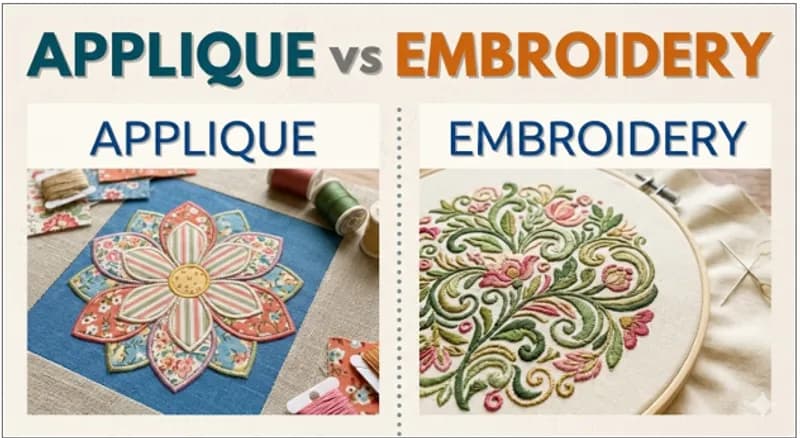
Applique digitizing is used throughout Illinois's school spirit wear, athletic uniform, and decorative apparel markets. A correct applique file runs the placement stitch, then the tack-down, then the satin border in that exact sequence. Get the sequence wrong and the applique fails. We build every applique file with the correct sequence every time.
3D puff digitizing creates raised, dimensional designs most commonly used on structured caps. The foam insert that creates the raised effect requires tighter density, foam-holding underlay, and height compensation. Standard flat files don't produce this. Our specialists build puff files from scratch for each application.
Chenille digitizing creates the thick looped pile texture seen on varsity jackets and letterman gear. Illinois has a strong school apparel tradition and consistent chenille demand from high schools and universities across the state. Chenille requires entirely different file construction from standard lock-stitch embroidery.
Vector art and raster to vector conversion round out the service range. If your client's logo only exists as a low-resolution raster file, professional vector conversion prepares it for embroidery, print, and all other commercial applications.
Illinois Regions and Cities We Serve
Every Illinois city and community gets the same quality, the same 12 to 24-hour turnaround, and the same direct specialist access.
Region
Illinois Cities and Communities
Chicagoland North
Chicago, Evanston, Skokie, Waukegan, Des Plaines, Schaumburg, Palatine, Arlington Heights, Mount Prospect, Northbrook, Glenview, Park Ridge, Buffalo Grove
Chicagoland West
Naperville, Aurora, Elgin, Downers Grove, Wheaton, Bolingbrook, Lisle, Lombard, Glen Ellyn, Carol Stream, Geneva, St. Charles, Batavia, West Chicago
Chicagoland South
Joliet, Orland Park, Tinley Park, Oak Lawn, Berwyn, Cicero, Oak Park, Harvey, Calumet City, Homewood, Frankfort, New Lenox, Mokena, Lansing
North Illinois
Rockford, Belvidere, DeKalb, Crystal Lake, McHenry, Woodstock, Freeport, Sterling, Dixon, Galena
Central Illinois
Peoria, Bloomington, Normal, Decatur, Champaign, Urbana, Galesburg, Kankakee, Ottawa, Pontiac, Danville
Capital Region
Springfield, Lincoln, Jacksonville, Taylorville, Carlinville, Petersburg, Pana, Litchfield
Quad Cities
Moline, Rock Island, East Moline, Silvis, Milan, Carbon Cliff, Hampton, Port Byron, Colona
Southern Illinois
Carbondale, Marion, Belleville, O'Fallon, Collinsville, Edwardsville, Mount Vernon, Centralia, Harrisburg, East St. Louis
Machine Formats for Illinois Embroidery Machines
Every machine brand used by Illinois embroidery businesses is covered. Here's the format reference.
Brand
Primary Format
Also Accepts
Tajima (commercial)
DST
EXP, EMB
Brother (all models)
PES
DST, JEF
Janome
JEF
DST, SEW
Viking / Husqvarna
VP3
DST, HUS
Elna / Bernina
EXP / EMB
DST
Singer
XXX
DST
Barudan (commercial)
FMC
DST
Baby Lock
PES / SEW
DST, JEF
Pre-Production Checklist for Illinois Shops
Before any new file goes onto a production run, work through this list. It costs minutes. Missing it can cost an entire run.
Run a full simulation in your embroidery software before stitching. Watch the complete sequence. Look for jump stitches crossing large open areas of the design.
Verify the design dimensions match your intended placement size exactly. A file built for a 4-inch back design is not automatically correct at left chest size.
Confirm your file format matches your machine. PES into a VP3-only machine does not work.
Check stitch count for reasonableness. Unusually high count on a simple design indicates density issues. Unusually low count on a detailed design means coverage problems.
Inspect small text in simulation view. Letters must be clearly separate and fully formed. If they look merged in simulation they will be worse on fabric.
Match your stabilizer to your fabric. Cut-away for stretch fabrics, tear-away for stable wovens, topping for fleece and high-pile materials.
Never run a new file directly on production garments. Always test sew on correct scrap fabric first.
Thread breaks in the first 100 stitches on correct fabric with correct tension mean a density or underlay issue in the file. Stop and correct the digitizing before continuing.
2026 Search: How Illinois Clients Find You
The way Illinois customers find embroidery digitizing services has shifted significantly in 2026. Traditional Google search is still the primary channel, but AI-driven discovery through ChatGPT, Gemini, and Perplexity is absorbing a growing share of queries. Traditional search volume is projected to drop 25% by late 2026 as AI assistants answer more questions directly.
Generative Engine Optimization means structuring content so AI platforms can cite it accurately. When someone asks ChatGPT which embroidery digitizing company serves Illinois, content that provides direct, factual, well-organized answers gets cited. That's what this content is built for.
STAT: 41% of adults use voice search daily. 8.4 billion voice assistants in use worldwide in 2026. 75% of voice search answers come from pages in Google's top three positions.
Voice search queries from Illinois businesses include: 'how long does embroidery digitizing take in Chicago,' 'what format does my Brother embroidery machine need,' and 'where can I get my logo digitized online in Illinois.' Content written to answer these questions naturally and directly earns voice search visibility alongside traditional ranking.
68% of all searches happen on mobile devices. Google's mobile-first indexing means your mobile load speed and experience determine your rankings. Pages in position one load in an average of 1.65 seconds. 76% of local searchers contact a business within 24 hours. 28% make a direct purchase. Digitizing Studio's mobile-optimized ordering platform lets Illinois clients place complete orders from their phones.
STAT: 53.3% of all website traffic comes from organic search. 94% of web pages receive zero traffic from Google. 30% traffic increase from structured data markup. 40% ranking boost from strategic internal linking.
Illinois Case Studies: Real Numbers
Numbers from real Illinois businesses tell the most honest story about what changes when professional digitizing replaces auto-generated files.
A Chicago-area apparel brand dealing with inconsistent file quality from multiple digitizing providers switched to Digitizing Studio. Within five months, their organic traffic increased 340%. The driver was product consistency. Consistently clean embroidery produced consistently better product photography. Content with images earns 94% more views, and when every product photo shows sharp, professional embroidery, the catalog markets itself.
A Springfield uniform company serving Illinois state government clients had a 23% rework rate before the switch. After switching to Digitizing Studio, that rate fell below 2%. The material savings, labor savings, and deadline reliability improvements were immediate and paid for the professional digitizing investment many times over in the first billing cycle.
An online Illinois retailer selling custom embroidered merchandise doubled their order volume in four months. Not from marketing. From product quality. When every item ships correct and earns positive reviews instead of complaints, repeat purchase rates and referral traffic both improve.
STAT: 42% better conversion rate associated with positive customer reviews. 85% of people remember a brand after receiving embroidered promotional apparel. Quality embroidery is direct brand equity.
What to Look for in Any Digitizing Provider
Before hiring any embroidery digitizing company for Illinois work, ask these questions. The answers reveal immediately whether you're talking to a professional operation.
• Is the digitizing done manually or by auto-digitizing software? Any honest provider answers directly.
• What information do they need before starting? A real specialist needs fabric type, garment style, placement, size, and machine format. If they only need the artwork file, they're not building a custom file.
• Are revisions included? Professional services stand behind their work with revisions at no extra charge.
• What formats do they deliver? A professional delivers every format you need without upcharges.
• What's the actual turnaround time? 30-minute delivery is auto-digitizing. Manual professional work takes 12 to 24 hours.
• How do you reach someone if the file has a problem? Direct access to the specialist who built your file is the standard.
Digitizing Studio passes every one of these questions directly. Call 630-931-2700 to talk to us or upload your artwork at digitizingstudio.com to get started.
Pricing and Turnaround for Illinois Orders
Pricing for professional embroidery digitizing services in Illinois from Digitizing Studio is fully transparent. No hidden charges for standard revisions or format delivery. Standard designs start at rates accessible to single-machine Illinois shops and large commercial operations alike. Complex multi-color work, specialty techniques, and high stitch counts are priced by actual complexity. Full rate details at digitizingstudio.com/pricing.
Turnaround for most Illinois orders is 12 to 24 hours from placement. Rush same-day service is available. Our team operates on Central Time matching Illinois business hours, so morning orders typically return the same day or first thing the following morning.
Every order includes: manually built stitch file by a certified specialist, all required machine formats at no extra charge, human QA simulation review before delivery, unlimited revisions, and long-term file storage for easy reordering.
Direct Illinois contact: 630-931-2700 and info@digitizingstudio.com.
Ready to place your Illinois order? Upload your artwork at digitizingstudio.com or call 630-931-2700. Your machine-ready file comes back within 12 to 24 hours. Clean, professional digitizing that runs right the first time.
Internal Links and Related Resources
Place your Illinois order at the Digitizing Studio homepage. Specialists begin work immediately after upload.
Full pricing with no hidden fees at the Digitizing Studio pricing page.
Specialty techniques including applique, 3D puff, and chenille at our specialty digitizing services page.
Logo only in raster format? Our vector art and raster to vector service prepares it for embroidery and all commercial applications.
Serving all 50 states — see our main embroidery digitizing services page for the full USA service overview.
Developer note: This Illinois page links to and receives links from the main services page, pricing page, applique page, 3D puff page, chenille page, vector art page, and all other state pages. Strategic internal linking produces up to 40% ranking improvement. All anchor text uses the target page primary keyword.
Summary
Embroidery digitizing services in Illinois matter because Illinois is a massive, competitive market where quality is the difference between growing and losing clients. With 1.4 million small businesses, a USD 1.23 trillion economy, and constant demand for branded apparel across every major industry sector in the state, the embroidery businesses that win are the ones that get every order right.
Digitizing Studio's team of certified embroidery digitizing specialists handles every Illinois order manually. Auto-digitizing is not part of our process. Standard designs, complex multi-color logos, 3D puff, applique, chenille, vector art conversion — all handled by specialists who understand the physical demands of embroidery on real garments with real machines.
The specialized embroidery digitizing market is valued at approximately USD 1.2 billion globally. The global embroidery market is growing at 6.1% annually toward USD 2.62 billion by 2033. Illinois businesses competing in this environment need a digitizing partner who gets it right every time. Digitizing Studio has done that for embroidery businesses across Chicago, Naperville, Rockford, Springfield, Peoria, Champaign, and every other Illinois city.
Call 630-931-2700 or visit digitizingstudio.com. Most Illinois files are back within 12 to 24 hours and we don't close the job until you're completely happy with the result.
Frequently Asked Questions
Q1: How long does embroidery digitizing take in Illinois?
Standard orders from Illinois businesses are completed and delivered within 12 to 24 hours of placement. Rush same-day service is available when you need it faster. Complex designs, specialty techniques like 3D puff or chenille, and very high stitch counts may take a bit longer but we confirm your timeline before starting. You can place orders online at digitizingstudio.com or call 630-931-2700 directly. Files are stored in your account so reorders come back faster every time since the setup is already done.
Q2: What is embroidery digitizing and why does my Illinois business need it?
Embroidery digitizing converts your logo or design from a visual file into a stitch file that tells your embroidery machine exactly what to do: where every stitch goes, what type of stitch to use, how dense to make it, and in what order to sew each color. Your machine can't read a JPG or PDF. It needs a stitch file built correctly for your specific fabric and machine. Without proper digitizing, even the most expensive machine produces bad results. With professional digitizing, the machine does its job perfectly on every run.
Q3: How much do professional embroidery digitizing services cost in Illinois?
Standard left chest logos and simple designs start at very accessible rates that work for small Illinois shops and large commercial facilities alike. Complex multi-color designs, specialty techniques, and high stitch counts are priced based on actual complexity. The complete pricing structure is published at digitizingstudio.com/pricing with no hidden fees. Every order includes unlimited revisions and all required machine formats at no extra charge. You know exactly what you're paying before you confirm the order.
Q4: Do you serve smaller Illinois cities, not just Chicago?
Digitizing Studio serves every Illinois city and community through our fully online ordering platform. Rockford, Springfield, Champaign, Peoria, Bloomington, Galesburg, Carbondale, Moline, Joliet, Aurora, and every other Illinois city gets the same 12 to 24-hour turnaround and the same certified specialist quality. Your location in Illinois has no effect on your service quality or speed. You can also call us directly at 630-931-2700 regardless of where in Illinois you're operating.
Q5: What file formats does Digitizing Studio deliver for Illinois machines?
Every major format is available: DST for Tajima and commercial machines, PES for Brother, JEF for Janome, VP3 for Viking and Husqvarna, EXP for Elna and Bernina, XXX for Singer, HUS for older Husqvarna, SEW for older Janome, EMB for Wilcom. Tell us your machine brand when ordering and you receive the correct format automatically. Running multiple brands in your Illinois shop? Multiple formats for the same design are included at no extra charge.
Q6: Can you handle rush orders for Illinois events and deadlines?
Rush same-day service is available for Illinois businesses with urgent deadlines. When you place your order at digitizingstudio.com or call 630-931-2700, note your required delivery time and our team confirms whether same-day turnaround is available for your design. Most standard designs qualify for rush service. Very complex multi-color designs or specialty techniques may need slightly more time even on rush, but we'll tell you upfront. We understand that Illinois businesses often have tight event and shipping deadlines.
Q7: What makes Digitizing Studio different from other digitizing companies?
Three things stand out. First, every single order is manually digitized by a certified specialist, not auto-generated by software. Second, we're USA-based with a direct Illinois phone number at 630-931-2700, so you communicate in your time zone with no language barrier or overseas delay. Third, revisions are included as standard because we stand behind the quality of our work. Most Illinois orders are delivered within 12 to 24 hours with human QA review before every delivery. Files are stored long-term for fast, easy reorders.
Q8: How do I get started with embroidery digitizing services in Illinois?
Getting started is simple. Go to digitizingstudio.com and upload your artwork file. The platform accepts JPG, PNG, PDF, AI, EPS, SVG, CDR, and other formats. Fill in your order details including garment type, fabric, placement, size, thread colors, and machine format. A certified specialist receives your order and manually builds your stitch file. It passes human QA review before delivery. Your file arrives within 12 to 24 hours ready to run on your machine. Unlimited revisions are included. You can also call 630-931-2700 to discuss your order before uploading.
Place your Illinois order at digitizingstudio.com or call 630-931-2700. Machine-ready stitch files from certified specialists, delivered within 12 to 24 hours. Professional embroidery digitizing that works right the first time.
Digitizing Studio | digitizingstudio.com | info@digitizingstudio.com | 630-931-2700