Best Embroidery Digitizing Services in USA
Picking the right embroidery digitizing service in the USA is honestly one of the most important decisions you'll make for your embroidery business or custom apparel project. I've talked to dozens of shop owners who burned through hundreds of dollars on bad digitizing before they found a provider they could actually trust. The frustration is real — you send over a clean logo, you wait a day or two, and what comes back is a stitch file that barely resembles the original once it hits fabric.
Here's what most people searching for digitizing services don't realize right away. Not every company that calls itself a professional digitizing service actually has skilled human digitizers working on your files. A huge chunk of what gets sold as "professional digitizing" online is just auto-generated output from software with zero human review. That's fine for the simplest text designs but it completely falls apart the moment your artwork has fine detail, small lettering, gradients, or any kind of complexity.
This guide covers everything you need to know about finding genuinely good embroidery digitizing services in the USA. We're going to look at what separates real quality from cheap shortcuts, how the digitizing process actually works, what you should expect to pay, how to read a stitch file before you even run it on your machine, and why Digitizing Studio has become a trusted name for custom embroidery digitizing across the country.
Whether you're running a commercial embroidery shop, ordering uniforms for your business, or working on a custom apparel line, the information here will help you make a smarter decision and stop wasting money on digitizing that has to be redone.
What Embroidery Digitizing Actually Is and Why It Matters So Much
Before you can pick the best embroidery digitizing service, it helps to understand what digitizing actually involves. A lot of people assume it's basically just uploading a file and downloading a different version of it. That's not really how it works at all.
Embroidery digitizing is the craft of converting artwork — a logo, illustration, photograph, or text — into a stitch file that an embroidery machine can execute. The machine doesn't interpret images visually. It reads a coded set of instructions that tells it exactly where to place each stitch, what type of stitch to use, at what density, in what direction, and in what order across every element of the design.
A professional digitizer is making thousands of individual decisions while building your file. They're choosing between satin stitch, fill stitch, and running stitch for different parts of the design. They're setting pull compensation to account for the way fabric stretches under the presser foot during stitching. They're laying down underlay stitches that stabilize the fabric before the visible top stitches go in. They're planning the sequencing so the machine moves efficiently and thread changes are minimized. They're handling small text in a way that actually stays readable once it's stitched.
When all of that is done well, your design comes off the machine looking sharp, clean, and exactly like the artwork you submitted. When it's done poorly — or skipped entirely in favor of auto-digitizing — you get puckered fabric, thread breaks, blurry outlines, and wasted materials.
This is why the quality of your digitizing provider matters more than almost any other variable in the embroidery process. Good thread, a well-maintained machine, and quality stabilizer can't save a badly digitized file.
What Separates the Best Digitizing Companies from Everyone Else
There are genuinely hundreds of embroidery digitizing companies operating in the USA and internationally. Some are excellent. A lot aren't. Here's how to tell the difference.
Human digitizing versus auto-digitizing is the biggest dividing line. The best digitizing companies employ experienced professional digitizers who manually build every file. Lower-quality services run your artwork through automatic conversion software and send you the output. The price difference between these two approaches is often just a few dollars per design — but the quality difference is enormous on anything more complex than a basic text design.
Revision policies reveal a lot about a company's confidence. A digitizing service that charges you for every revision is essentially admitting their first attempt might not be right. The best services stand behind their work with free revisions until you're satisfied. That's not just a nice perk — it tells you they're confident enough in their quality to not nickel-and-dime you when adjustments are needed.
Turnaround time is important but shouldn't come at the expense of quality. The best USA digitizing services deliver standard orders within 24 hours while maintaining quality. Some rush same-day service is reasonable. But if a service promises 2-hour digitizing on complex designs, something in the process is being skipped.
Format flexibility matters for real embroidery operations. If you're running multiple machine brands or serving clients with different machines, you need a digitizing partner that delivers any format you need. DST, PES, JEF, VP3, XXX, EMB, EXP — the best services handle all of them without extra charges.
Stitch-out samples in their gallery should show real fabric results, not just digital previews. Software simulations always look good. Photos of actual stitched designs on real garments tell you what you're actually going to get.
Specialization across design types sets the top providers apart. Standard flat embroidery digitizing is one thing. Being equally capable with 3D puff digitizing, applique digitizing, chenille digitizing, and towel embroidery digitizing shows a deeper level of expertise that not every company has.
The Most Important Embroidery Digitizing File Formats You Need to Know
One of the first conversations you should have with any digitizing service is about file formats. This sounds like a technical detail but it directly affects whether the file they deliver actually runs on your machine.
Every major embroidery machine brand uses its own native file format. DST is the Tajima format and has become the most broadly compatible option — most commercial machines can read a DST file even if it's not their native format. But for home and semi-commercial machines, native formats matter a lot.
Brother and Babylock machines use PES files. Janome machines use JEF. Husqvarna Viking and Pfaff machines use VP3 or HUS. Singer machines use XXX. Melco commercial machines use EXP. Wilcom's professional digitizing software uses EMB as its native format, which is common in commercial digitizing studios.
If you give a digitizing service your order without specifying your format and they don't ask, that's a bad sign. A professional embroidery digitizing company always confirms the required format before beginning the digitizing work.
Digitizing Studio delivers files in any format your machine requires. If you ever switch machines or need to provide a client with a different format, format conversion is something they handle without hassle.
How Professional Embroidery Digitizing Actually Gets Done
Understanding the digitizing process helps you evaluate whether a service is actually doing the work they claim to be doing. Here's what happens inside a genuinely professional digitizing workflow.
The work starts with your artwork file. The cleaner and higher resolution your source file, the better the digitizing result. Vector files — AI, EPS, SVG — give the digitizer the clearest possible reference material. High-resolution raster files like PNG and JPEG work fine for most projects. Blurry, pixelated, or very low resolution images make the digitizer's job significantly harder and increase the chance of errors.
Once the artwork is loaded into professional digitizing software, the digitizer begins assigning stitch types to each element of the design. Solid filled areas get fill stitches. Borders, outlines, and narrow shapes get satin stitches. Fine details and outlines that are too narrow for satin get running stitches. These aren't arbitrary choices — each decision affects how the design looks on fabric.
Pull compensation is set next. When embroidery machines stitch into fabric, the needle pulls the material slightly, compressing the design in the stitch direction. Without pull compensation, satin columns end up narrower than intended and shapes don't meet cleanly at their edges. A skilled digitizer compensates for this mathematically so the stitched result matches the original artwork dimensions.
Underlay stitches are built under every element of the design. These are low-visibility foundation stitches that stabilize the fabric, push down the nap on fleece or terry cloth, and give the top stitches a firm surface to sit on. Designs without proper underlay pucker, shift during stitching, and look uneven when finished. This is one of the most technically nuanced parts of digitizing and one of the areas where auto-digitizing consistently falls short.
The stitch sequence is then planned so the machine moves logically through the design, minimizing jumps and trims. Every unnecessary thread trim adds potential for thread breaks and adds time to the stitch-out. A well-sequenced design runs faster and cleaner than a poorly sequenced one.
Finally, the file is exported in the required format, reviewed one more time in the simulation, and delivered to you.
Why Logo Digitizing Gets Its Own Category of Difficulty
Logo digitizing deserves specific attention because it's the most common type of digitizing request and also one of the easiest places for quality to fall apart.
Your logo is your brand's visual identity. When it's embroidered on a polo shirt, a cap, a bag, or a jacket, it represents your company in the physical world. A professionally digitized logo looks sharp, crisp, and exactly like your brand guidelines specify. A poorly digitized logo looks fuzzy, uneven, and makes your brand look unprofessional — sometimes to the exact clients you're trying to impress.
The challenges in logo digitizing are real. Gradients and color blends that look beautiful in print or on screen don't translate directly to embroidery because thread is a physical medium with a finite color range. A skilled digitizer finds ways to suggest gradients through stitch direction changes and strategic thread color selection rather than trying to recreate them directly.
Small text within a logo is consistently the most technically demanding element. Letterforms under 4mm in height start losing their definition in embroidery. A quality digitizer simplifies fine letterforms just enough to preserve readability while maintaining the character of the typeface. Auto-digitizing software almost universally handles small text poorly — the letters come out blobby or illegible.
Fine lines, thin borders, and intricate detail elements need careful stitch type selection and precise density settings. Get it wrong and those elements either disappear into the fabric or bunch up and look thick and clumsy.
Digitizing Studio's team handles logo digitizing with the level of care that brand-quality work requires. Every element of your logo gets individual attention so what's stitched onto your garment genuinely represents your brand the way you intended.
Custom Embroidery Digitizing Services and What Makes Them Worth It
The word "custom" in custom embroidery digitizing services should mean something specific. It should mean your design is being built from scratch for your exact requirements — not processed through a template, not batch-converted, not passed through auto-software and sent to you with a human having glanced at it for thirty seconds.
Genuinely custom digitizing means the digitizer considers your specific garment type when setting up the file. A left-chest logo on a smooth cotton polo needs different density and underlay settings than the same logo on a thick fleece pullover. The file needs to be optimized for the material it's going to stitch into, not just for the design itself.
It means size variations are handled thoughtfully. A logo digitized at 4 inches wide shouldn't just be scaled down mathematically to 1.5 inches — the stitch density, the minimum feature sizes, and the detail level all need to be reconsidered for the smaller size. A design that works beautifully at large sizes can become unstitchable at small sizes if the digitizer doesn't properly rebuild it for that scale.
It means the digitizer is actually thinking about your end use. Are you running this on a single-needle home machine or a 12-head commercial machine? Are you doing a short run for a corporate client or ongoing production for a uniform program? These factors can affect how the file is optimized.
Digitizing Studio provides fully custom embroidery digitizing on every single order. There are no templates, no batch processing, and no auto-conversion. You're getting a file built specifically for your design and your needs.
You can check the full range of custom embroidery digitizing services on the Digitizing Studio website to see what's included with every order.
Specialty Digitizing Services That Set the Best Providers Apart
Standard flat embroidery digitizing covers the majority of jobs. But the best embroidery digitizing companies offer the full range of specialty techniques that different applications demand.
3D Puff Digitizing
3D puff embroidery is one of the most visually striking embroidery techniques, especially popular for caps and structured headwear. It uses foam placed beneath the stitching to create a raised, three-dimensional effect that gives logos and lettering serious visual impact.
Digitizing for puff is significantly more complex than flat embroidery. The digitizer has to account for the foam thickness in every stitch setting. Satin columns need to be wider to prevent foam show-through. Stitch angles have to be precisely planned to hold the foam correctly. Small text and fine detail don't work well with puff because the foam makes them hard to control. A skilled puff digitizer knows which design elements work in puff and how to build them so they look excellent on a finished cap.
Applique Digitizing
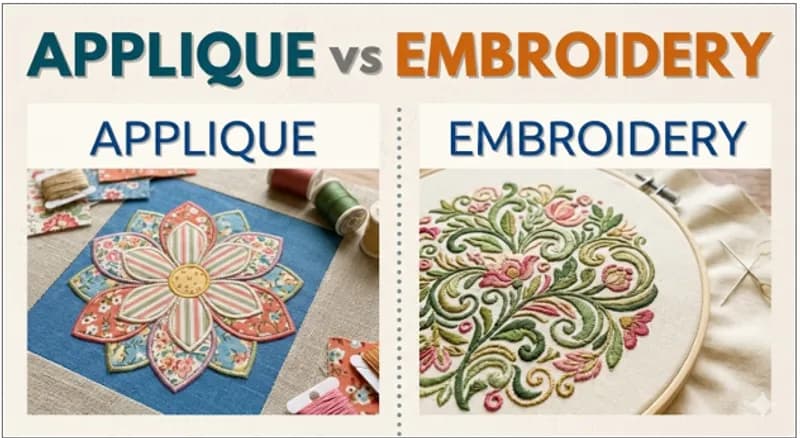
Applique digitizing combines fabric cutouts with embroidery stitching. The machine first places a placement stitch outline, the operator places a cut piece of fabric, and the machine then stitches down the fabric piece with a tack-down stitch followed by a finished border. It's a multi-step process that requires the digitizer to plan the entire sequence precisely so every step happens at the right moment.
Applique is popular for large design areas where solid fill stitching would be too heavy or too time-consuming. A well-executed applique piece looks clean and professional. Poorly digitized applique results in fabric that shifts, puckers at the border, or pulls away from the garment.
Chenille Digitizing
Chenille embroidery uses a completely different machine, needle type, and yarn system than standard embroidery. It creates the thick, textured, raised look you see on varsity letterman jackets, athletic patches, and collegiate merchandise. Chenille digitizing requires specialized knowledge that most general embroidery digitizers don't have. Only a handful of experienced providers offer genuine chenille digitizing services.
Towel Embroidery Digitizing
Terry cloth and velour towels are among the most challenging fabrics to embroider. The looped pile of the fabric absorbs stitches and makes designs look soft and indistinct if the file isn't built correctly. Towel embroidery digitizing uses heavy underlay to compress and stabilize the pile before the top stitches go down. Stitch density is increased compared to flat fabric work. The result, when digitized correctly, is crisp and professional even on thick hotel-grade towels.
Vector Tracing
Vector tracing isn't embroidery digitizing exactly, but it's a service that often goes hand in hand with it. If your artwork is a low-resolution raster file that needs to be cleaned up before digitizing — or if a printer, sign maker, or branding agency has asked you for a vector version of your logo — vector tracing converts your raster artwork to clean, scalable vector files in AI, EPS, or SVG format.
How Much Embroidery Digitizing Services Cost in the USA
Pricing is one of the most common areas of confusion for people new to ordering digitizing services. There's an enormous range of prices out there, from $2 per design on the low end to $80 or more for complex specialty work. Here's what's actually behind those numbers.
The most common pricing model for professional digitizing services is per-design pricing based on stitch count and complexity. A simple left-chest logo with limited detail and a stitch count under 8,000 typically runs in the $10 to $20 range from a quality provider. Medium complexity designs with more detail and stitch counts up to 20,000 run $20 to $40. Highly detailed designs, large fill areas, complex artwork, or specialty techniques like 3D puff or chenille push into the $40 to $80+ range.
What's happening at the extreme low end of the market deserves a specific mention. Services charging $2 to $5 per design are almost universally running auto-digitizing software and sending you the raw output. For a basic text design on smooth fabric, that might work acceptably. For anything more complex, you're going to have problems that end up costing you more than if you'd just paid for quality digitizing upfront.
Rush service adds a reasonable premium — typically $10 to $20 per design for same-day turnaround. That's fair given that it requires a digitizer to drop other work and prioritize your order.
Digitizing Studio's pricing is published transparently on the pricing page so you know exactly what you're paying before you place your order. There are no hidden charges, no surprise fees, and revisions on standard orders are included.
The real cost calculation for digitizing isn't just the fee per file. It's the fee per usable, production-ready file. A $15 professional digitizing job that runs perfectly the first time is dramatically cheaper than a $5 job that requires three revision rounds and still comes back wrong.
Online Embroidery Digitizing Services vs Local Options
A lot of people instinctively search for embroidery digitizing services near them, and that makes sense — there's a natural comfort in working with someone local. But in practical terms, online embroidery digitizing services have significant advantages for most customers.
The most obvious advantage is access to specialized expertise regardless of geography. The best embroidery digitizers in the USA may not be in your city. Online services give you access to those skilled professionals whether you're in New York, Texas, California, or anywhere in between.
Turnaround through online services is typically faster than local options because the ordering, communication, and file delivery all happen digitally. You submit your artwork, specify your requirements, and receive your file — all without anyone driving anywhere or waiting for a physical meeting.
Pricing through reputable online services is generally more competitive than local options because online providers are operating at scale and competing in a national market. Local providers often charge premium rates because they're serving a limited customer base.
The file delivery process is identical regardless of where the digitizer is located. You receive a digital file that you use on your machine. There's no physical component that requires proximity.
Digitizing Studio operates as an online embroidery digitizing service, which means businesses anywhere in the USA can access professional, fast, quality digitizing without geographic limitations. International customers in the UK, Australia, and Canada are also served.
Reading Embroidery Digitizing Quality Before You Even Stitch It Out
One of the most useful skills for anyone ordering digitizing services regularly is learning to evaluate a file before running it on your machine. There are clear signs of quality and clear red flags that you can see in the simulation view of your embroidery software.
Look at the underlay structure first. Toggle the underlay layer on in your embroidery software and look at what's there. Good digitizing has deliberate, appropriate underlay under every design element. Missing or sparse underlay is a sign of either auto-digitizing or lazy manual work.
Check the stitch sequence. A well-planned file moves the machine efficiently through the design with minimal jumps and thread trims. Lots of jumps crisscrossing the design indicate the sequence wasn't planned thoughtfully.
Look at the density settings. Overly dense stitching will push through and damage fabric and thread. Under-dense stitching will look thin and show the fabric beneath the stitching. Professional digitizers set density appropriately for the design type and fabric specified.
Zoom into any text elements. Small letters should have clean, simplified letterforms that will stitch clearly. If they look complex and intricate in the simulation, they're going to be a mess on fabric.
Check for proper pull compensation on satin columns. Satin elements should look slightly wider in the file than they appear in the artwork. This compensates for the pull that stitching puts on fabric. If satin columns look exactly as thin as the original artwork, pull compensation wasn't set.
None of this requires being a digitizing expert. A few hours of learning to read a stitch file pays off significantly if you're ordering digitizing regularly.
Common Embroidery Digitizing Mistakes That Cost Businesses Real Money
Whether you're ordering digitizing services or evaluating what you've been receiving from your current provider, these mistakes show up again and again in poorly digitized files.
The most expensive mistake is choosing a provider based on price alone. There's a real floor on what quality digitizing costs because quality work takes time and expertise. When a service is priced dramatically below market rates, something is being cut — and that something is almost always the quality of the actual digitizing work. Businesses that chase the cheapest digitizing consistently end up spending more in the long run through redos, wasted materials, and client complaints.
Submitting low-quality artwork is the next most common issue. A digitizer can only work with what you give them. Blurry, pixelated, or very small raster images force the digitizer to guess at design details and make compromises. Always provide the highest quality version of your artwork — if you have a vector file, use it.
Not specifying the garment type and fabric when ordering is a mistake that generates avoidable problems. The same design needs different settings on a smooth cotton polo versus a thick fleece jacket versus a terry cloth towel. When you don't specify, the digitizer has to make assumptions that may not match your actual application.
Expecting auto-digitizing to handle complex designs is a source of ongoing frustration for many embroidery shops. Auto-digitizing has improved significantly in recent years and genuinely works for simple designs. But it still consistently fails on fine detail, small text, and anything with real complexity. Knowing when to use a professional human digitizer versus when auto-digitizing is acceptable saves time and money.
Skipping the test stitch-out before production is a mistake even experienced embroiderers make. Even excellent digitizing occasionally needs a small tweak for a specific machine, thread brand, or fabric combination. Running a test on similar scrap fabric before committing to a full production run is always worth the cost of a few minutes and a piece of fabric.
What to Look for in an Embroidery Digitizing Company Before You Commit
Finding the best embroidery digitizing service in the USA for your specific needs means knowing what questions to ask and what to look for before you send your first order.
Ask to see real stitch-out samples from previous work. Not digital previews — actual photos of embroidered garments. The gallery should show a range of design types and complexities, not just the best-looking simple logos.
Find out whether the digitizing is done by human professionals or by auto-software. A company that's proud of their quality will tell you exactly who is doing the work and what their process involves. Vague answers to this question are a red flag.
Understand the revision policy in detail. Free revisions with no limit until you're satisfied is the standard you should hold providers to. Limited revisions or per-revision charges suggest the company isn't confident in their first-attempt quality.
Check their format support. Can they deliver your file in the exact format your machine requires? Do they offer format conversion if your needs change?
Look at their turnaround commitments and whether those are realistic given the quality they're claiming. Rush service is fine. Instant complex digitizing is a sign of auto-processing.
Review their pricing transparency. A company that won't post their pricing publicly is probably not confident it's competitive. Pricing should be clear, published, and easy to understand before you place an order.
Digitizing Studio meets all of these standards. The gallery shows real work on real garments. Every file is human-digitized. Revisions are free. All formats are supported. Turnaround is within 24 hours on standard orders. Pricing is posted publicly. There's a reason businesses come back to Digitizing Studio order after order.
How Digitizing Studio Serves USA Embroidery Businesses
Digitizing Studio was built specifically to serve the practical needs of embroidery businesses, custom apparel operations, promotional product companies, and individual embroiderers across the USA and beyond. Here's what that looks like in practice.
Every order placed through digitizingstudio.com goes to a real, experienced digitizer — not an automated conversion pipeline. The digitizer reviews your artwork, notes your specifications, and manually builds your stitch file from scratch. Your design's complexity determines the care and time that goes into the file, not a one-size-fits-all template.
Standard orders deliver within 24 hours. Rush service is available for urgent projects. The ordering system is fully online, which means you can submit artwork, specify requirements, communicate about revisions, and receive your files entirely through the web portal — no phone tag, no in-person meetings, no delays waiting for someone to check their email.
The service range covers everything an embroidery operation needs. Standard flat digitizing is the core service, but 3D puff digitizing, applique digitizing, chenille digitizing, towel embroidery digitizing, and vector tracing are all available under one roof. Not having to manage multiple vendors for different digitizing types saves time and creates consistency across your work.
Revisions are included at no extra charge. If your stitch-out reveals anything that needs adjustment — density, sizing, color sequence, a small text issue — the revision is handled quickly and without nickel-and-diming you.
Payments are processed securely through trusted payment systems including Visa, Mastercard, PayPal, and Stripe.
Getting started is straightforward. Visit digitizingstudio.com, create your account, and place your first order. Upload your artwork, tell the team what you need, and have your stitch-ready file back within 24 hours.
Embroidery Digitizing for Different Industries and Applications
The demand for professional embroidery digitizing services in the USA spans an enormous range of industries. Here's how different sectors use digitizing services and what specific quality considerations apply to each.
Corporate Uniforms and Workwear
Corporate clients expect brand-consistent, professional results on every garment. Logo placement precision, accurate brand colors mapped to thread, and consistent quality across large production runs are all critical. This is an area where cutting corners on digitizing costs is a particularly bad idea — the embroidered result is literally representing your client's brand to their customers every day.
Sports Teams and Athletic Apparel
Sports applications often involve team names and numbers, mascots, and complex multi-element designs. Athletic fabrics can be challenging to embroider — performance fabrics stretch and have technical textures that need specific digitizing approaches. Puff embroidery is common for caps and headwear in this segment.
Promotional Products Industry
Promotional product distributors need fast, reliable digitizing at volume. Turnaround time is critical because promotional campaigns have hard deadlines. The ability to handle a wide range of product types — bags, caps, polos, towels, outerwear — from a single digitizing provider is a significant operational advantage.
Custom Apparel and Merchandise
Individual designers, clothing brands, and merchandise creators need digitizing that respects the artistic intent of their designs. This is an area where the human judgment of an experienced digitizer matters enormously — understanding not just the technical requirements but the creative intent behind a design.
Hospitality and Hotel Industry
Hotels, resorts, and spas embroider on towels, robes, linens, and staff uniforms. Towel embroidery digitizing is a specialty because terry cloth requires specific handling. The volume involved in hospitality applications makes quality digitizing especially valuable — a file that runs cleanly and consistently saves significant time and material costs across large production runs.
Real Results from Working with a Professional Digitizing Service
The practical difference between professional digitizing and auto-digitizing or low-quality manual digitizing shows up in real, measurable ways in your embroidery operation.
Thread break rates go down significantly with properly digitized files. When density is set correctly, underlay is built properly, and stitch paths are planned well, your machine runs cleaner with fewer interruptions. For commercial embroidery operations, fewer thread breaks directly translates to more output per hour and lower production costs.
Rework rates drop dramatically. A file that stitch-outs correctly the first time means no redoing garments, no wasted blank apparel, and no time spent troubleshooting. For operations where garment costs are significant — outerwear, technical apparel, uniforms — this is a major expense reduction.
Client satisfaction and repeat business increase when finished products consistently look exactly like the approved artwork. This is especially true for corporate and promotional clients who compare your output to a specific brand standard.
Stitch-out time per design becomes more predictable with well-optimized files. Proper sequencing reduces unnecessary jump stitches and trims, which means designs run faster and more efficiently.
These are the real-world reasons why experienced embroiderers don't make digitizing decisions based on price alone. The cost of the digitizing file is a small fraction of the total cost of a production run. Getting it right is always worth the investment.
Summary
The best embroidery digitizing services in the USA share the same core qualities — human expertise on every file, fast reliable turnaround, full format support, transparent pricing, and free revisions until the result is right. Finding a provider that delivers all of those consistently is genuinely valuable, because quality digitizing is the foundation that everything else in your embroidery operation builds on.
Digitizing Studio brings professional digitizing to businesses and individuals across the USA with a process built around getting your files right the first time. Whether you need standard flat embroidery digitizing, 3D puff, applique, chenille, towel digitizing, or vector art services, the team handles it all with the technical precision your designs deserve.
Ready to get started? Visit digitizingstudio.com to create your account and place your first order. Check the pricing page for transparent, competitive rates. Browse the gallery to see real stitch-out results. And if you have questions about a specific project, reach out through the contact page — the team is ready to help you get exactly what you need.
Frequently Asked Questions
What makes an embroidery digitizing service the best in the USA?
The best embroidery digitizing services combine human expertise with fast turnaround, transparent pricing, and a genuine revision commitment. Every design should be hand-digitized by an experienced professional — not processed through auto-conversion software. The best providers support all major machine file formats, deliver within 24 hours on standard orders, and stand behind their work with free revisions. Stitch-out quality that consistently matches the original artwork, across a range of design types and complexity levels, is the real measure of a great digitizing service. Price matters but it shouldn't be the deciding factor. A slightly higher rate from a quality provider produces usable files the first time. Cheap services that require multiple redos cost more in the end.
How do I know if embroidery digitizing is being done by a human or by software?
Ask directly. A reputable digitizing company will tell you clearly that every file is hand-digitized by a professional. They should be able to explain their process — how they build underlay, how they handle pull compensation, how they approach small text — in terms that reflect real expertise. If a service is vague about their process or deflects the question, that's a signal. You can also judge by the pricing. Genuinely manual professional digitizing can't be sold profitably at $2 to $5 per design. If the price is that low, auto-software is doing the work. Running the delivered file through your embroidery software and looking at the underlay structure is another way to check — thoughtful, deliberate underlay is a sign of human work.
What file format should I request for my embroidery machine?
The format you need depends on your machine brand. Brother and Babylock machines use PES. Janome uses JEF. Husqvarna Viking and Pfaff use VP3 or HUS depending on the model. Singer machines use XXX. Tajima commercial machines and most compatible formats use DST, which is also the most broadly compatible option if you're not sure. Melco machines use EXP. If you're using a commercial machine from a major manufacturer, check the machine's documentation or the manufacturer's website to confirm the correct format. When you order from Digitizing Studio, specify your format in the order notes and that's exactly what you'll receive. Format conversion to a different format later is also available if your needs change.
Can embroidery digitizing services handle complex or detailed artwork?
Yes, but complexity is a real factor in both pricing and what's achievable. Detailed artwork with fine lines, intricate elements, small text, and multiple colors requires significantly more digitizer expertise and time than a simple logo. Some elements that look great in print genuinely can't be reproduced in embroidery — extremely fine linework, photorealistic gradients, and very small text under 3mm in height all have limitations in the embroidery medium. A professional digitizer will work with your artwork to get the best possible embroidery result and will advise you honestly if a design element isn't going to translate well to stitching. The key is submitting high-quality source artwork and communicating your priorities so the digitizer knows what matters most in your specific design.
How long does embroidery digitizing take from submission to delivery?
Standard orders at Digitizing Studio deliver within 24 hours. Simple logos and straightforward designs are often completed same day. More complex designs, specialty work like 3D puff or chenille digitizing, or orders submitted during peak periods may take up to 48 hours. Rush same-day service is available for urgent projects at an additional charge. The ordering portal at digitizingstudio.com is available around the clock so you can submit artwork at any time. Delivery is digital — your file comes back through the same portal you used to submit your order.
What should I do if the digitized file doesn't stitch out correctly on my machine?
Request a revision. At Digitizing Studio, revisions are free and handled quickly. Before requesting a revision, run a physical test stitch on a fabric sample that's the same as or similar to your actual garment fabric. Note specifically what isn't right — is the density too heavy or too light? Is small text coming out illegible? Is the design puckering? Are there thread breaks at a specific point in the design? The more specific your feedback, the faster and more accurately the revision can be made. Most revision issues are resolved in a single round when clear feedback is provided.
Does embroidery digitizing work for photographs?
Photo digitizing is possible but it involves artistic interpretation rather than direct conversion. Photographs have far more colors, tonal gradients, and fine detail than embroidery thread can reproduce. A skilled digitizer reviews a photo and makes creative decisions about how to simplify it into embroiderable shapes and a workable thread color palette. The result is an embroidery design inspired by the photo rather than a photorealistic reproduction of it. Portraits with strong contrast, mascot designs based on animal photos, and artistic textile work are the most common photo digitizing applications. For best results, submit the highest resolution photo you have and discuss your expectations with the digitizing team before ordering.
Are online embroidery digitizing services reliable for ongoing business use?
Absolutely, and for most embroidery businesses they're significantly more practical than local-only options. Online services give you access to specialized expertise regardless of geography, typically offer faster turnaround than local providers, and operate at competitive prices because they're serving a national or international market. The entire workflow — artwork submission, order specifications, revision requests, file delivery — happens digitally so there's no friction or delay from physical location. Businesses across the USA rely on Digitizing Studio as their ongoing digitizing partner precisely because the online model is efficient, consistent, and produces quality results order after order.